
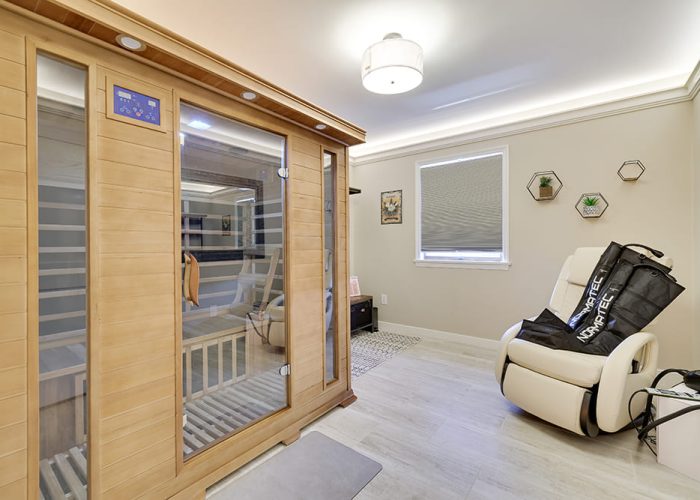
Infrared Sauna
Infrared saunas heat the body without warming room surfaces, getting great results with no risk of heat stress.
Infrared Sauna (Tier 1)
If you’re wondering about the difference between regular and infrared saunas, here’s the skinny. Traditional saunas heat their inside surfaces and dry the air with hot stones or ovens, which then heat the body.
In contrast, infrared saunas heat the body without warming room surfaces, getting great results with no risk of heat stress. This means they could well be safer than traditional saunas, for people who are sensitive to heat.
Many studies have confirmed the safety of infrared saunas for conditions that range from arthritis and Alzheimer’s to diabetes and dementia, as well as high blood pressure and heart failure, for people unable to withstand the heat of a traditional sauna.
Here’s how infrared saunas work:
- They radiate heat directly onto your skin, which is easily absorbed;
- These heatwaves penetrate deeply but gently into joints, muscles, and tissues;
- The core body temperature rises as a result, but with no need for scorching-hot air;
- As a result, your body sweats at much lower temperatures than in traditional saunas, eliminating toxins without overheating.
First-timers are always curious about the health benefits of an infrared sauna. Their questions often include topics like this – and the answer to all of them is simple: Yes!
· Does an infrared sauna ease pain?
· Can it heal wounds?
· What about weight loss?
· Will it tighten and brighten up my skin?
· Is it good for a general detox?
· Might it ward off colds and flu?
Explore these Benefits in Greater Detail
· Pain Relief: as infrared waves can penetrate deep into muscles, joints and other tissues, regular sauna sessions can ease chronically painful conditions like fibromyalgia and arthritis;
· Wound Healing: as infrared light promotes fibroblasts that make elastin and collagen, infrared sauna sessions can speed up the healing process for burns and other open wounds through faster cell regeneration;
· Weight Loss: according to an article published by Harvard Medical School, the physiological responses to a sauna are similar to those produced by a brisk walk, with a double benefit: not only are calories burned during an infrared sauna session, but the entire metabolism is boosted, helping shed even more pounds;
· Smoother Skin: by stimulating collagen and elastin production, an infrared sauna can offset some of the effects of aging, by plumping up the epidermis and reducing wrinkles, while sweat cleans out clogged pores and leaves skin glowing;
· Detoxification: constantly subjected to stress, fatigue, and pollution, while often battling inflammation and infection, the body releases a steady stream of toxins and other waste materials through the skin; this process is speeded up during an infrared sauna, which gets the blood pumping and opens pores, resulting in a deep-cleansed system with enhanced energy and well-being;
· Immunity: the light spectrum used in infrared saunas stimulates the mitochondria, boosting immune cell growth and activity, helping you fight off infections faster;
· Better Sleep: infrared saunas help lessen insomnia by inducing deep relaxation, with lower levels of cortisol, which is often called the stress hormone;
· Lower Blood Pressure: as peripheral blood vessels dilate in heat and muscles relax, circulation improves, blood circulation and heart rate both increase, while arteries and veins expand and blood pressure drops naturally.
- Blue: Promotes calmness, relaxation, and tranquility.
- Green: Encourages balance, renewal, and harmony.
- Violet: Associated with inspiration and mindfulness.
- Indigo: Supports reflection and inner awareness.
- Yellow: Linked to mental clarity and optimism.
- Orange: Encourages creativity and enthusiasm.
- Red: Promotes energy, vitality, and motivation.
Service Duration
Begin at 30 minutes and work your way up to 45 minutes per session
How Often to Use Infrared Sauna
3-5 times a week, working your way up to daily if desired
Members
$29
Package - 3 - $59 | 5 - $99 | 10 - $169
Retail
$39
Package - 3 - $79 | 5 - $139 | 10 - $199


Migraine Relief IV Therapy
Ranked by the World Health Organization as one of the top ten medical illnesses, migraines affect over 37 million people in the USA. Three times more common among women than men, these crippling attacks will affect more than 30% of women during their lifetimes.
Although they’re so debilitating, science still hasn’t discovered the exact cause of these incapacitating super-headaches. Some researchers believe that abnormal brain activities temporarily affect signals in the brain, with alterations to chemicals and blood vessels.
There’s also some evidence that there may be a genetic factor in migraines, perhaps reflected in inherited sensitivities to specific triggers.
Studies have indicated that triggers may be internal, like emotional, physical, and hormonal factors, while others may be external, like diet, medications, and the environment. Highly individual, these triggers vary from person to person, and may change over time.
For instance, some women find that migraines caused by hormonal changes improve after menopause. This is also why certain medications – including combined contraceptive pills and hormone replacement therapy – must be handled carefully for migraine sufferers.
Other frequent triggers include stress, low blood sugar, and dehydration. Fatigue and poor sleep quality may also be to blame, particularly when sporadic, due to jetlag or shift work.
Frequent dietary culprits are caffeine, alcohol, chocolate, and citrus fruit, as well as foods containing tyramine, which include cured meats, smoked fish, and certain cheeses.
Many of the environmental triggers would give anyone a headache: sun glare, flickering lights, smoky or poorly ventilated rooms, loud noises, and strong smells.
When any of these stimuli (and often several at the same time) slam into over-sensitized receptors, the brain overreacts with outsized responses. As its electrical systems misfire in all directions, blood flows alter and nerves are constricted, causing intense pain.
Severe pulsing and throbbing may grip the entire head, or just one side, often accompanied by dizziness, vomiting and nausea, and extreme sensitivity to sound and light. These symptoms can be so severe that migraine victims are unable to work or care for their families.
Intravenous infusions may provide migraine relief in several ways, by delivering electrolytes and vitamins directly into the bloodstream, in a hydrating feline solution. Providing faster and more effective relief than tablets, IV therapy sews overactive nerve endings, while addressing individual symptoms (like pain, inflammation, and nausea) all at the same time.
Affecting one out of every seven people across the globe, migraine is the world’s third most common disease. Although not a definitive cure, IV drip therapy at Magnolia Poconos Wellness offers fast relief from pain, with extra benefits that include mood boosts, with added energy and deeper relaxation.
If you take prescription medications, please check with your physician before signing up for a Migraine Relief IV session.
Members
$139
Retail
$189
Your spa service weekend!
Book your services to our Poconos PA location and enjoy a package stay at our private stream side resort, Magnolia Streamside Resort.
